AMERICA'S HISTORY:
Freedom Of expression
The story of the US is one based on freedom of expression:
Who has it, who doesn't, and how it has been challenged over time
By Graham Frischer
Introduction
A long-standing American value is the importance of freedom, specifically freedom of expression. Our commitment to freedom of expression has shaped our country and its trajectory since our founding. This expression can take many forms, whether through music, art, writing, or other media, and has played a role at every stage of America's development, enabling us to become the nation we are today. In establishing America as an independent nation, the Founding Fathers wanted to address some of the shortcomings they perceived under British rule. They felt the British government had too much control over its colonies and citizens alike. Liberty and the freedoms it engenders were a key part of their objective "to form a more perfect union," as they noted in the preamble to the Constitution (National Archives).
The importance of freedom of expression has been evident since the colonial period in America, when ideas about the values that should underpin a free society and a new nation gained popularity. Even before we declared independence from Britain in 1776, Americans were engaged in a dialogue about the kind of country we wanted to be. These discussions led to the drafting of our most revered documents, including the Federalist Papers, in which historic figures like Alexander Hamilton, James Madison, and John Jay shared their opinions on what they thought a new government should look like. The ideas they shared, debated, and argued over were ultimately incorporated into the Declaration of Independence and the US Constitution, a document that continues to define us as a nation 250 years later.
It was through the expression of lived experiences that we gained a better understanding of the inhumanity of slavery, challenged the belief system of the day, and ultimately called for the abolition of slavery. In the years that followed, when Jim Crow laws continued to deprive "free" Americans of basic human rights, the great orators of the civil rights movement used their voices to compel lawmakers to stand up for all its citizens, regardless of their skin color. Later, freedom of expression was essential to the rise of the Black Lives Matter and Me Too movements that have altered our social fabric in recent years. The importance of expressing one's story cannot be overstated, as it forces millions of people to confront injustices that might otherwise have remained unseen.
Now, with new technological developments, people can share their voices more broadly, and ideas can spread across the country--and the globe--in seconds. Our nation continues to evolve through its commitment to freedom of expression. Every citizen has a right to share their beliefs and values without fear of reprisal and an opportunity to shape the direction and cultural landscape of our country. Today, as always, this freedom is imperfect. But it is through our shared commitment to this core value that we will continue to reimagine and improve upon our social and ideologic norms as we face the future.
Timeline of Major Events

iPhone 17 (2026)
The iPhone 17 is Apple's most recent iPhone and the most high-tech phone they have ever made. With this new smartphone, the user can stay connected to any network, no matter where they are, offering limitless potential for sharing ideas. It has an exceptional microphone and the best video recording features ever included on a phone. Reviewers call it "the creator's Swiss Army Knife." The iPhone 17 represents a new era in communication. Since the launch of the original iPhone on June 29, 2007, Apple has transformed the way people communicate. The introduction of apps and social media platforms has made sharing ideas, challenging social norms, and reenvisioning what's possible increasingly fluid, rapid, and expansive. Reach and immediacy, once the sole domain of TV news and celebrities, are now in the hands of the 98% of people across the US who own smartphones. The technology facilitated the rise of the Black Lives Matter and Me Too movements, changed the way society makes sense of social justice, and accelerated reform. The proliferation of smartphones like the iPhone has ushered in a new age of communication, advancing the dissemination of fresh ideas across the country and around the globe. The new iPhone 17, with its advanced features and incorporation of AI, will amplify this change. (Lendino, Jamie)
"I Have a Dream" (1963)
Select this paragraph to add your own text. Just drag and drop or click here to add this paragraph to your site, then you can add your own content and make changes to the font.
On August 28, 1963, at the Lincoln Memorial in Washington, DC, Dr. Martin Luther King Jr. delivered The Dream Speech. At a time when speaking out for black rights could be dangerous, Dr. King chose to speak out rather than remain silent. In so doing, he inspired political and ideological change across the country. In his speech, Dr. King demanded equal rights and the end of discrimination against black people (King Martin Luther). He argued that blacks were not free despite promises of freedom and equality in the Constitution and Declaration of Independence (Younge Gary). Additionally, he famously argued that "Americans should not be judged by the color of their skin but by the content of their character" (King Martin Luther). He used patriotic language, repetitive phrases, and powerful imagery to fight for a more united America that would abolish segregation and racism. His speech illustrates the goals and peaceful strategies of the civil rights movement, which used communication and the expression of ideals rather than violent protest to enact change. Dr. King's courage highlights the importance of speaking out instead of remaining silent and the power of free expression.

(Lendino, Jamie)
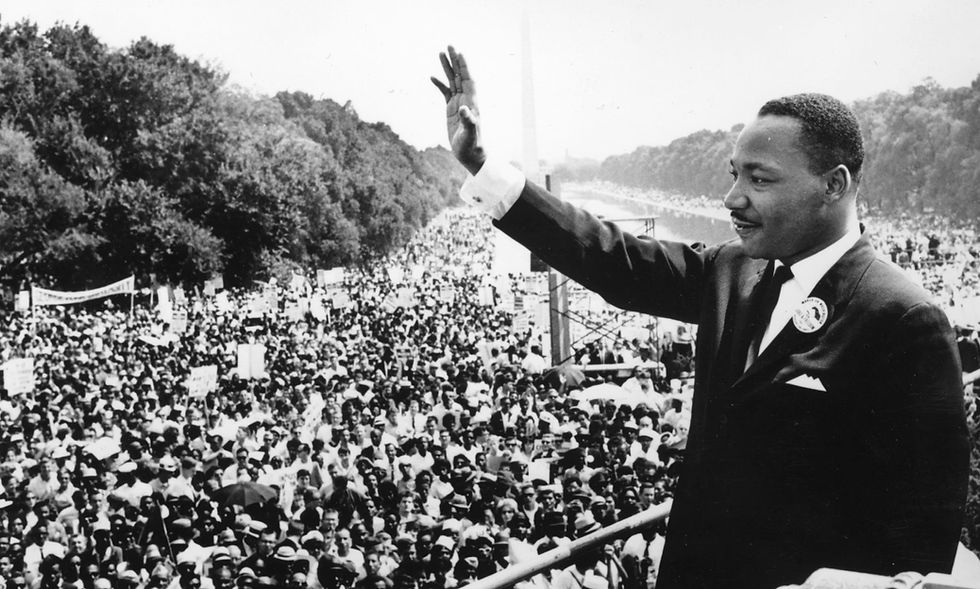
(King Martin Luther)
Paul Mares' Trumpet (1930s)
Crafted in the early 1930s, this trumpet belonged to Paul Mares (June 15, 1900 – August 18, 1949), one of the top trumpeters of the Prohibition era who had a significant and long-lasting impact on jazz and modern music (“Paul Mares’ Trumpet,” The Mob Museum). As a white man, he paved the way for black musicians to express themselves beyond the New Orleans music scene. In the '30s and '40s, black jazz musicians expressed their emotions, resistance, and solidarity against racism through their music. As a white musician, Mares was able to capture the attention of national record labels and advance the agenda of black jazz musicians of his time. Mares took advantage of the liberties his white status offered and ushered in a new form of musical expression (“Paul Mares (1900-1949) - the Syncopated Times”). Through his accomplishments, black jazz musicians were in turn able to produce their own music and share it broadly, ushering in the age of jazz.
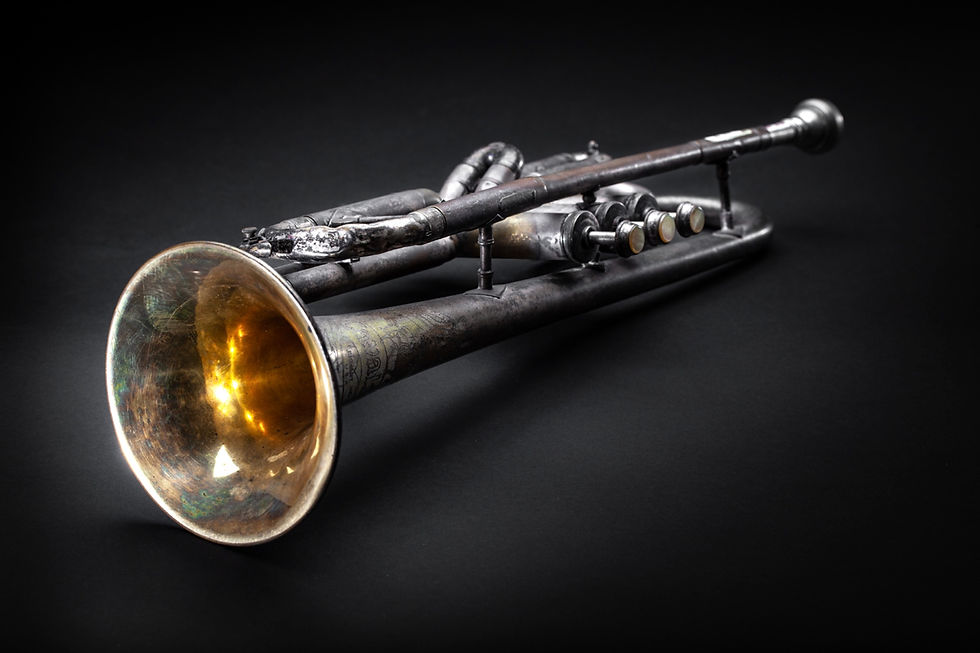
("Paul Mares Trumpet-MOB Museum")
Narrative of the Life of Frederick Douglass (1845)
Narrative of the Life of Fredrick Douglass was a book published by Frederick Douglass, an American slave, in 1845. It is an account of his experiences as an enslaved person living in the United States before escaping to freedom. He wrote the book to highlight the cruelty and injustice of slavery and to support the abolitionist movement. Douglass wanted to show white Northerners the truth about slavery and convince them that the enslaved were intelligent and deserving of freedom. The book recounts his own experiences as a slave and the tactics his owners used to keep him under their command. Douglass wrote that learning to read gave him the skills to express himself and to give voice to the plight of slaves at a time when there was no one to speak for them. Reading empowered him, gave him insights into the world beyond his environment, and motivated him to keep striving for his goal of freedom both for himself and others, effectively changing the narrative of slavery and society's understanding of the humanity of black people (Douglass Frederick).

(Douglass Frederick)
Bill of Rights (1791)
In 1791, 3 years after the states ratified the US Constitution, the state legislatures ratified the Bill of Rights. The Bill of Rights is a collection of the first 10 amendments to the US Constitution. The First Amendment was primarily written by James Madison. The purpose of this amendment was to prevent the government from becoming too powerful and to guarantee five core freedoms: Freedom of religion, freedom of speech, freedom of the press, freedom to assemble, and freedom to petition. This amendment states that Congress cannot make laws restricting these freedoms (Maddison James). It codified the people's right to express themselves, advocate for change, and know that their voices could be heard without fear of prosecution. It underscored America's commitment to personal liberty and supported democratic participation. The Founders chose these freedoms to be the First Amendment because they believed they were "natural rights" essential for the health and stability of a government run by the people. The prioritization of these rights proved to be foundational in establishing America's national character and shared commitment to independence, liberty, and the free exchange of ideas and practice of beliefs (Campbell, Jud).

(Maddison James)
Benjamin Franklin Printing Press (1725)
This is the printing press Benjamin Franklin used while working in England in 1725. At the time, legal and political restrictions impacted printing houses, limiting the information they could circulate ("Franklin Printing Press"). Upon returning home to the Americas, Franklin used the skills he gained in England to establish his own printing house in Philadelphia, where he published the Pennsylvania Gazette, the most important newspaper in the country at the time. He used the Pennsylvania Gazette to counter British propaganda and amplify the voices of American colonists in their quest for independence (Magazine and Smyth). Benjamin Franklin overcame the restrictive nature of the British publishing houses and placed the power of open expression in the hands of the US colonists. That power helped disseminate ideas at the time and contributed to uniting colonists in their drive to become independent from Britain. For the first time, the news of the day and public sentiment could be broadly disseminated, stimulating public discourse and setting the colonies on the path toward independence.

("Franklin Printing Press")